SHOPPING BAG
How To Make Coffee in Office Coffee Machine?

The final step is also the simplest.
The capsule is placed into the coffee machine, and with the press of a button, the coffee reaches your cup. The quality of this moment, however, begins to take shape much earlier: in the soil where the coffee tree took root, at the altitude where the fruit ripened, in the climatic conditions that influenced its growth, and at the exact moment chosen for harvesting.
in the soil where the coffee tree took root, at the altitude where the fruit ripened, in the climatic conditions that influenced its growth, and at the exact moment chosen for harvesting.
What comes before cannot be corrected during roasting, nor compensated for during brewing. It forms the foundation upon which the aromas, balance, and character of every cup are built.
That is why, when we talk about high-quality coffee, the conversation begins long before the first press of the button. This dedication to every single stage lies at the core of Nespresso’s coffee expertise—from selecting the cherry to the final extraction.
Every cup begins with the Coffea plant, which grows in tropical regions between the Tropics of Cancer and Capricorn.
Its fruit, known as coffee cherries due to their shape and red color when ripe, conceal the coffee beans inside.
The tree provides the fruit; the origin shapes the coffee’s character.
Origin is therefore not just a piece of information on a label. It is the starting point for the characteristics that will follow the bean throughout its entire journey.
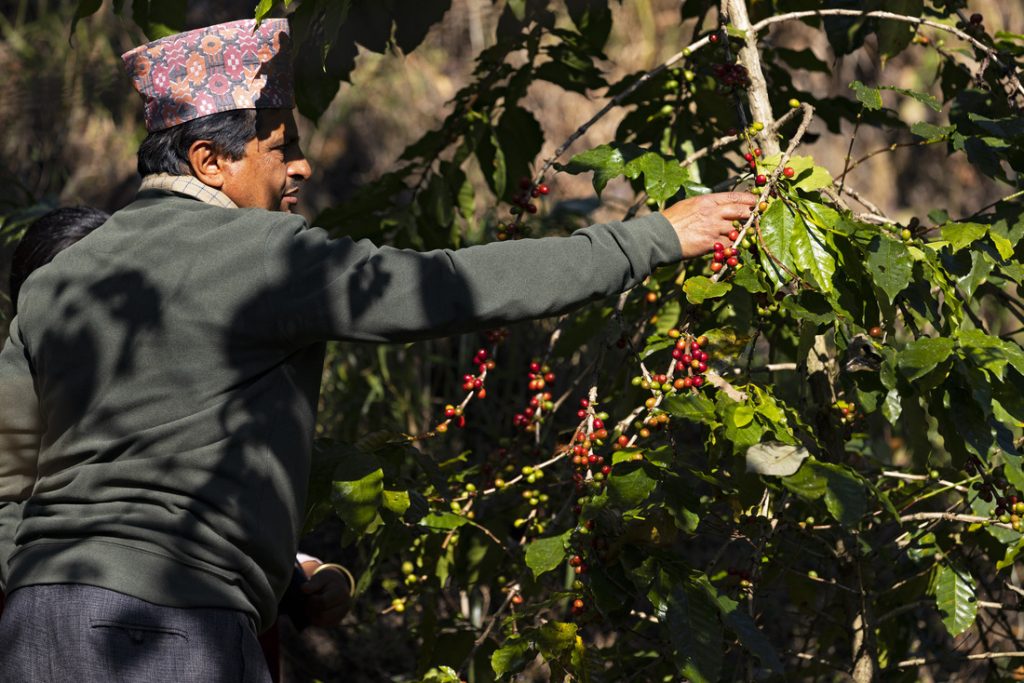
Just as with wine, terroir plays a decisive role in coffee: the combination of natural conditions that characterize a specific growing region.
The soil, altitude, variety, geographical location, and climate create a distinct growing environment. Temperature, rainfall, sunlight, and humidity all influence the fruit and are reflected in the coffee’s aromatic and flavor profile.
A coffee’s character is not determined solely by the plant. It is shaped through its relationship with the land where it grows.
From this identity flow all subsequent stages of its journey.
The cherries of the same coffee tree do not all ripen at the same time. Some are ready for harvest, while others need more time.
The moment of harvesting is crucial, as coffee performs best when the fruit has reached the optimal stage of ripeness. This is why Nespresso relies primarily on hand-harvesting, ensuring that only properly ripened cherries are selected.
It is a more demanding and time-consuming process, but it allows unripe and overripe cherries to be excluded before they can affect the final result.
Selection continues even after the harvest.
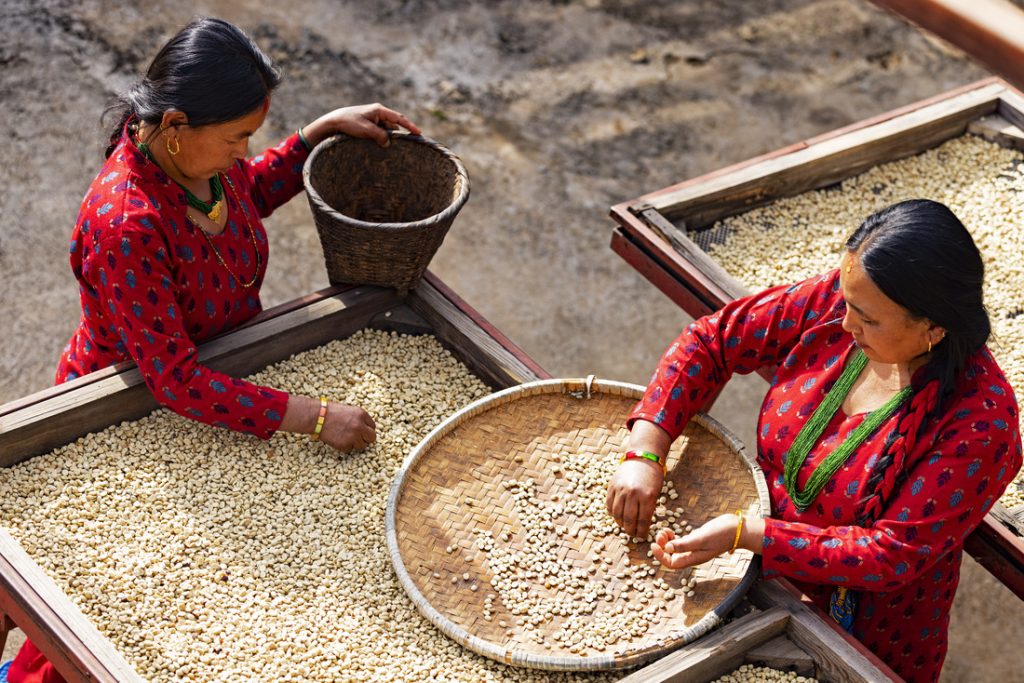
The beans are sorted and inspected to ensure consistency in their characteristics. The more uniform they are, the more consistently they can be roasted, leading to a more balanced cup.
A single defective bean can affect the final result. For this reason, physical and sensory checks are repeated before the coffee is packaged in the country of origin, prior to transport, and again upon arrival in Europe.
Through cup testing, only the beans that meet the highest quality standards are selected.
Creating a blend is similar to the work of a perfumer.
Just as a perfumer understands how different notes interact within a composition, Master Blenders select origins with distinct characteristics and combine them with precision.
Each origin brings its own aromatic and flavor profile, body, and intensity to the blend. The value of a blend does not lie merely in the quality of each individual origin, but in how they all work together.
Certain characteristics are enhanced, others are balanced, and each element retains its role without overpowering the rest.
The result is not a compromise between different coffees. It is a composition designed to highlight their distinct traits within a harmonious whole.
The process relies on sensory evaluation. Nespresso experts connect what they perceive in the cup with the variety, terroir, and care given during cultivation.
This capability is not taken for granted—tasters are trained, tested, and certified so their decisions remain consistent and precise.
Roasting does not create the quality of the coffee;
it reveals it.
Time, temperature, and other parameters are tailored to the unique characteristics of each blend. There is no single method for all compositions, as each requires a different approach to express its character clearly.
The goal is to highlight the aromas and flavors already present in the green bean while maintaining balance among the blend’s individual elements.
The same precision is required during grinding.
Every coffee type and blend requires a custom approach to grinding parameters so that proper extraction is achieved, bringing out balanced flavors and aromas.
Roasting and grinding cannot fix what happened before. They simply reveal the character already forged from the coffee tree to the careful selection of the beans.
After roasting, time starts working differently.
Exposure to oxygen causes oxidation and can gradually degrade the coffee’s aromatic character. Freshness, therefore, cannot be taken for granted—it must be protected.
For this purpose, Nespresso created the hermetically sealed aluminum capsule. Its complete barrier capacity limits contact with oxygen and helps preserve around 900 volatile aromas.
Protection begins immediately after roasting is completed. From that point until the coffee is packaged into the capsule, processing takes place in a controlled atmosphere to prevent contact with oxygen.
Thus, everything developed and highlighted in previous stages remains protected until the moment of extraction.
All the preceding steps depend on the coffee tree continuing to grow under conditions that allow for high-quality production.
Sustainable farming is not a separate chapter; the connection between quality, farmers, and the environment sits at the heart of Nespresso’s sustainable quality approach.
This collaboration is based on long-term relationships. Farmers know their trees and crops better than anyone. Together with Nespresso, they seek ways to improve practices and maintain quality over time.
The result is visible in the cup, but the work was done long before.
No single stage operates in isolation, and no subsequent step can undo what came before.
When the same attention to detail is applied throughout the entire journey, the outcome is not just a good coffee—it is a consistent experience of quality, crafted from the coffee tree to the cup.
The coffee tree grows in tropical regions between the Tropics of Cancer and Capricorn. The coffee’s characteristics are influenced by the soil, altitude, and climatic conditions of each region.
The coffee tree produces fruits called coffee cherries due to their shape and red color when ripe. Inside them lie the coffee beans.
Terroir is the combination of environmental conditions that characterize a specific growing region, such as soil, altitude, temperature, rainfall, sunlight, and humidity. These factors shape the coffee’s character.
Cherries on the same tree do not all ripen at the same time. Hand-harvesting allows workers to pick only the cherries that have reached optimal ripeness.
Roasting does not create quality; it reveals the coffee beans’ aromatic and flavor profile. Time and temperature are adapted to each blend so that different origins can express themselves properly.
After roasting, coffee is processed in a controlled atmosphere and sealed in hermetic aluminum capsules. This limits exposure to oxygen and preserves its aromas until extraction.